

UNESCO World Heritage Roman Limes at Museum De Bastei
Anyone walking in Nijmegen from the Waal to Valkhofpark may not realize the fascinating late Roman history hidden beneath their feet. At Museum De Bastei, this past comes to light as the museum expands its exhibition around this UNESCO World Heritage site.
Walled city
Between 2015 and 2016, archaeologists discovered remains of a Roman wall during the construction of Museum De Bastei in Nijmegen. Initially, the original function of these remains was unclear. Further research has created a new picture of Nijmegen in late Roman times (3rd and 4th century AD). Coins and burial sites indicate that not only soldiers lived on the Valkhof Hill, but also women and children. So it was a real city, not just a military base. The city was probably built between 270 and 293 AD and remained inhabited into the 5th century. The city was walled. Around it was a defense system with dry moats.

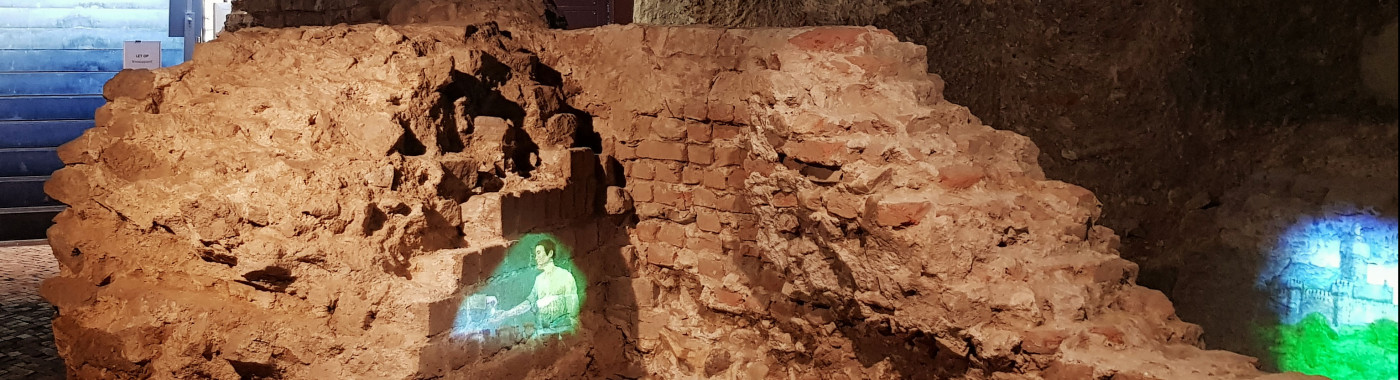
At the foot of the hill, on the bank of the River Waal, there was an additional defensive wall. It is the remains of this wall that were found during the construction of the museum. During the excavations for the renovation of our museum, remains of a Roman double recessed gate, which was part of the wall, were also found. This gate closed off the steep road that led to the fortified town. The finds are part of the UNESCO World Heritage Site of the Lower Germanic Limes.
New presentation Late Roman wall and gate
We are showing these wall and gate remains in a renewed presentation with lighting, floor markings, and a life-size visualization. This makes the Roman past of this location on the Waal visible and accessible to a wide audience. The Roman building remains are part of our permanent exhibition 2000 years of building alongside the Waal.